作者: admin

  • Quality Control for Premium Gift Boxes: How We Inspect Every Order

    Quality Control for Premium Gift Boxes: How We Inspect Every Order

    首页/资源/Quality Control for Gift Boxes

    Quality Control for Premium Gift Boxes: How We Inspect Every Order

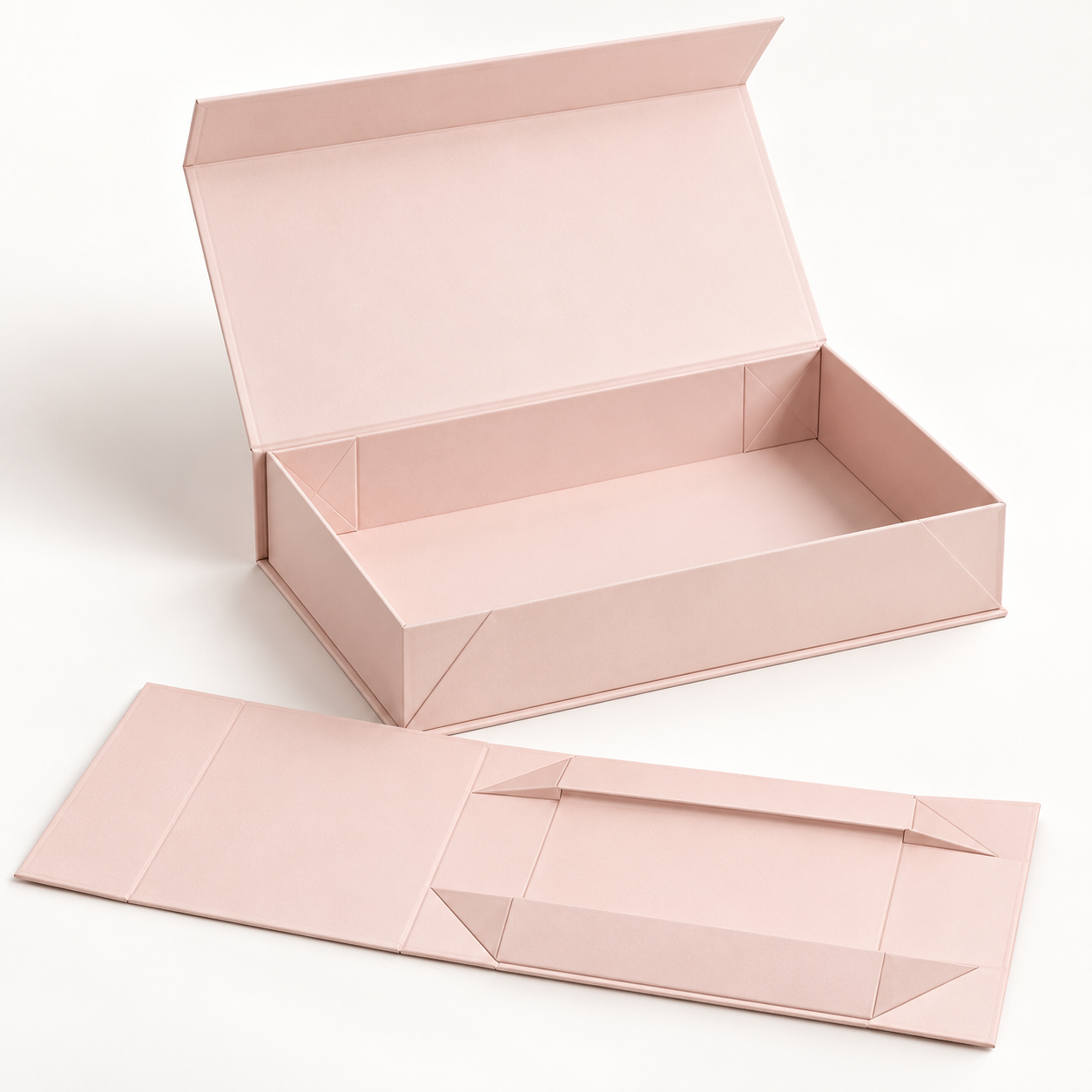
    Precision inspection of a premium gift box

    By the Xinhongcai Packaging TeamUpdated 20 October 20267 min read

    Quality control for premium gift boxes means checking materials before production (IQC), monitoring the line during production (IPQC) and inspecting finished goods before shipment (OQC), all against an approved sample. Premium packaging leaves little room for error: a scratch, a color shift or a loose corner is visible the moment the box is opened.

    Key takeaways

    • The approved sample is the standard every batch is checked against.
    • Three inspection stages (IQC, IPQC, OQC) catch problems early, when they are cheap to fix.
    • Common defects: color variation, scuffs, glue marks, wrinkled wrap, misaligned lids and weak magnets.
    • Ask any supplier for its inspection standard, records and certifications.

    The three inspection stages

    StageWhenWhat is checked
    IQC: incoming quality controlBefore productionBoard thickness, paper, inks, magnets, ribbons and inserts against specification
    IPQC: in-process quality controlDuring printing, forming and assemblyColor match, finishing quality, glue, corner shape, fold lines, magnet position
    OQC: outgoing quality controlBefore packing and shipmentDimensions, appearance, open-close and fold tests, quantity and carton marking

    Inspection by sampling follows recognized statistical practice such as acceptable quality limit (AQL). Details of our process are on the quality control page, and the full flow is in how collapsible rigid boxes are manufactured.
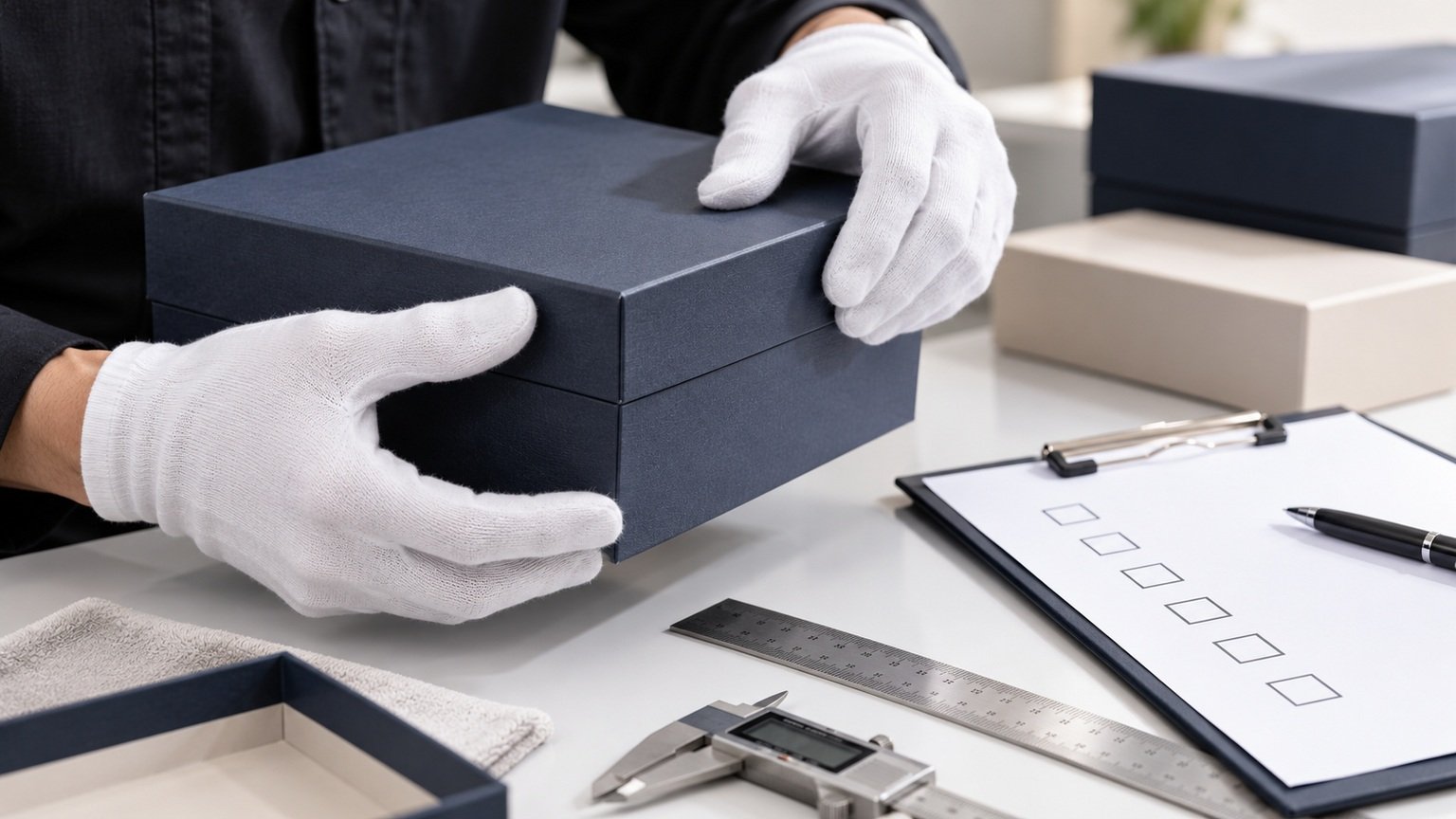
    Quality inspector in gloves checking a rigid gift box under bright light
    Every batch is inspected against the approved sample.

    Common defects and how they are prevented

    • Color variation: controlled with Pantone references and press checks.
    • Scuffs and scratches: protective lamination and careful handling and packing.
    • Glue marks and bubbles: controlled adhesive application and wrap pressure.
    • Misaligned lids: measured on every batch with an open-close test.
    • Weak or misplaced magnets: placement jigs and pull checks.
    • Dimension errors: sampled measurements against the dieline.
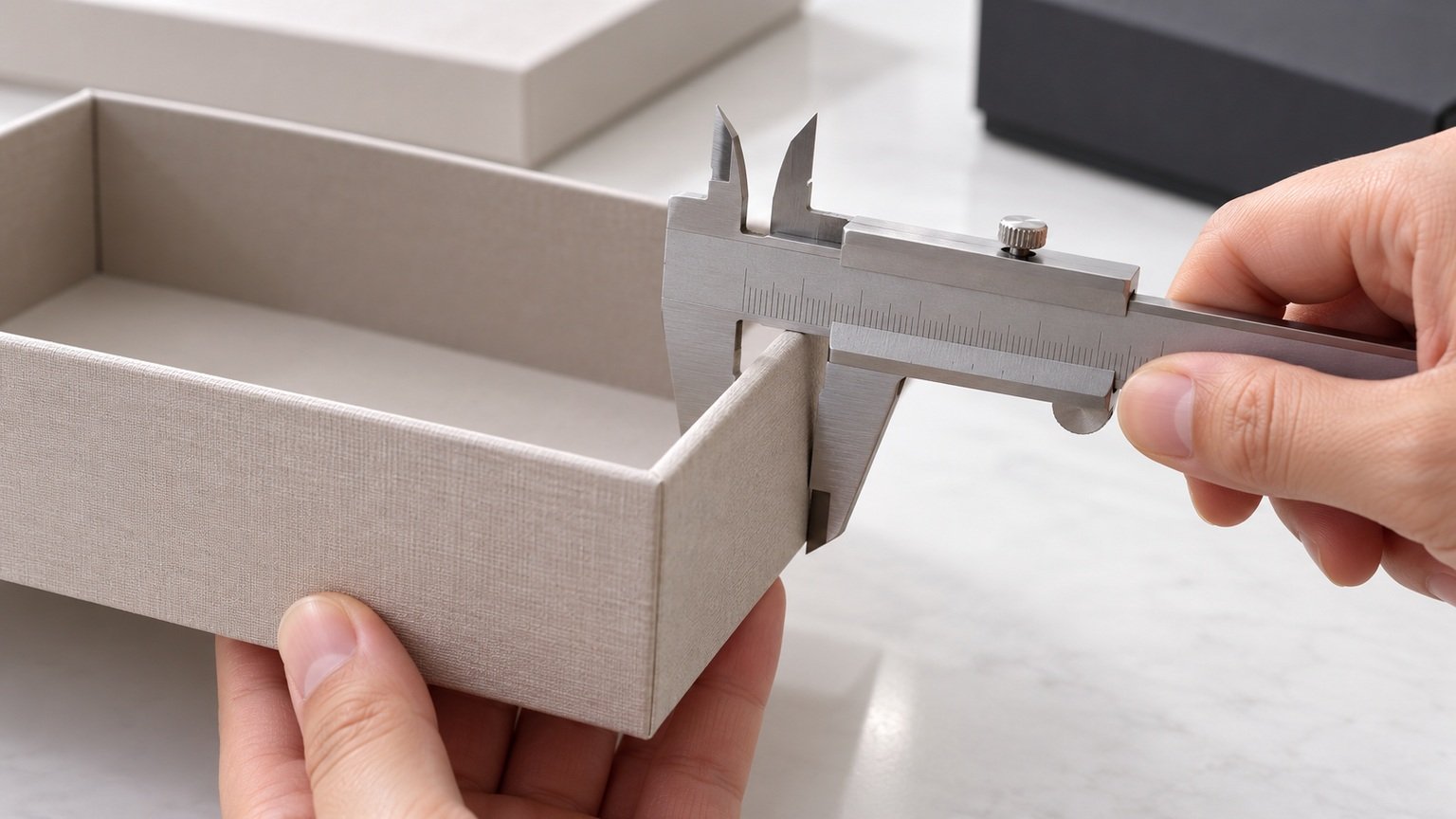
    Caliper measuring a rigid box edge on an inspection table
    Dimensions are measured against the dieline.

    Approve before mass production

    A physical sample is confirmed with you first. Once signed off, it becomes the reference for each production batch. Changes after approval are re-sampled so there are no surprises. See how to brief a supplier.

    Certified systems

    Our factory operates under ISO 9001 quality management and ISO 14001 environmental management, holds FSC certification for responsibly sourced paper, and is amfori BSCI audited. View them on our certifications page.

    What to ask any packaging supplier

    1. What inspection stages do you run, and who signs off?
    2. Do you work to an AQL standard, and can I see a report?
    3. Will I approve a physical sample before production?
    4. What certifications do you hold, and can I verify them?
    5. How are defects handled if found after delivery?

    Frequently asked questions

    What is IQC, IPQC and OQC?

    They are incoming, in-process and outgoing quality control: checks on materials, on the production line and on finished goods before shipment.

    Can I arrange third-party inspection?

    Yes. We welcome buyers' own or third-party inspectors before shipment.

    What if I find defects on arrival?

    Contact us with photos and batch information so we can investigate and resolve it under the agreed terms.

    Which certifications support quality and sustainability?

    ISO 9001 for quality, ISO 14001 for environmental management, FSC for paper sourcing and amfori BSCI for social compliance audits.

    Do you test magnetic closures?

    Yes. Magnet position and closure are checked during assembly and final inspection.

    Learn about our QC

    See our inspection process, certifications and how to start a sample.

    Learn About Our QC

    索取报价

    请告诉我们您的项目信息。分享您的包装盒样式、尺寸、材料和数量,我们的团队会为您提供定制包装报价。.

    查询表格
  • China vs Vietnam Packaging Production: Which Base Is Right for Your Order?

    China vs Vietnam Packaging Production: Which Base Is Right for Your Order?

    首页/资源/China vs Vietnam Production

    China vs Vietnam Packaging Production: Which Base Is Right for Your Order?

    China vs Vietnam packaging production

    By the Xinhongcai Packaging TeamUpdated 20 October 20266 min read

    For most packaging projects, Dongguan, China is the faster, more complete base; Vietnam is worth considering when a non-China origin, tariff planning or supply diversification matters. With production bases in both Dongguan and Vietnam, we match each order to the right location based on market, volume and timing.

    Key takeaways

    • Dongguan has the full packaging supply chain close by, so sampling and lead times are fast.
    • Vietnam suits programs where destination-market tariffs, sourcing rules or supply diversification matter.
    • Check current tariff and origin rules for your market with a customs adviser before deciding.
    • Tell us market, volume and deadline and we will recommend a production plan.

    At a glance

    FactorDongguan, ChinaVietnam
    Best forMost custom rigid boxes, folding cartons, paper cards and insertsLarger repeat programs, non-China origin needs, diversification
    Supply chainPaper, board, inks, magnets and inserts nearbyGrowing; some materials may be imported
    Sampling speedFast; samples typically 3 to 5 working daysConfirm per project
    Lead time10 to 20 working days after sample approvalConfirm per project
    ShippingEstablished South China portsVietnamese ports; confirm routing
    Tariffs and originSubject to current rules of your marketMay differ; verify for your product and market
    Modern packaging factory exterior with trucks at the loading bay
    Our packaging production base in Dongguan.

    Dongguan, China

    Our main factory covers 12,800 m² in Dongguan and is the base for custom rigid boxes, folding cartons, paper cards and inserts, with sampling, printing, finishing and assembly all under one roof. See production capacity, our production process and quality control. Dongguan is part of the Pearl River Delta, one of the world's largest manufacturing regions: see Dongguan.

    Vietnam

    Our group's Vietnam facility gives customers an alternative production base for projects where destination-market tariffs, sourcing rules or diversification of supply matter. Vietnam's manufacturing sector has grown quickly; see overviews of the economy of Vietnam. Contact us for current capacity and lead times for your specific project.

    Container port at golden hour with stacked shipping containers
    Port access and shipping routes affect landed cost.

    How to choose

    1. Need speed or many SKUs? Choose Dongguan.
    2. Need a non-China origin? Ask about Vietnam.
    3. Complex finishes or inserts? Dongguan's nearby suppliers help.
    4. Large repeat program? Compare landed cost from both. See reducing packaging shipping costs.
    5. Origin and tariff questions? Verify with your customs broker; rules change. Reference: WTO rules of origin.

    Frequently asked questions

    Do you produce in both China and Vietnam?

    Yes. We have our main factory in Dongguan, China and a group facility in Vietnam.

    Which location is faster?

    Dongguan is usually faster for new projects because the supply chain is close and sampling is quick.

    Will Vietnam production avoid tariffs?

    Not automatically. Tariffs depend on your market, product and origin rules, so check with your customs adviser.

    Is quality the same in both locations?

    We apply our quality standards and approved-sample process to each project; ask about project-specific QC.

    How do I choose?

    Send market, volume and deadline and we will recommend a plan.

    Find the right production plan

    Tell us your market, volume and deadline.

    索取报价

    索取报价

    请告诉我们您的项目信息。分享您的包装盒样式、尺寸、材料和数量,我们的团队会为您提供定制包装报价。.

    查询表格
  • Inside Our Production Process: From Dieline to Finished Box

    Inside Our Production Process: From Dieline to Finished Box

    首页/资源/Our Production Process

    Inside Our Production Process: From Dieline to Finished Box

    From dieline to finished box

    By the Xinhongcai Packaging TeamUpdated 20 October 20266 min read

    Every order at our 12,800 m² Dongguan factory follows the same controlled path: design and sampling, printing and finishing, forming and assembly, then inspection and export packing. A typical project takes 10 to 20 working days from sample approval to finished goods, depending on quantity and finishes.

    Key takeaways

    • Sampling comes first: you approve a physical sample before mass production.
    • Printing, finishing, forming and assembly are under one roof, which keeps lead times short.
    • Quality checks run at incoming, in-process and outgoing stages.
    • Lead time is typically 10 to 20 working days after sample approval.

    1. Design and sampling

    We confirm structure, size and materials, then prepare a dieline and a white or printed sample for approval. Once you sign off, the sample is the standard for production. Not sure which structure? See how to choose a collapsible gift box.

    2. Printing and finishing

    Offset printing is followed by finishes such as lamination, hot-foil stamping, embossing, spot UV and die-cutting, depending on your design. See our automation and technology page.

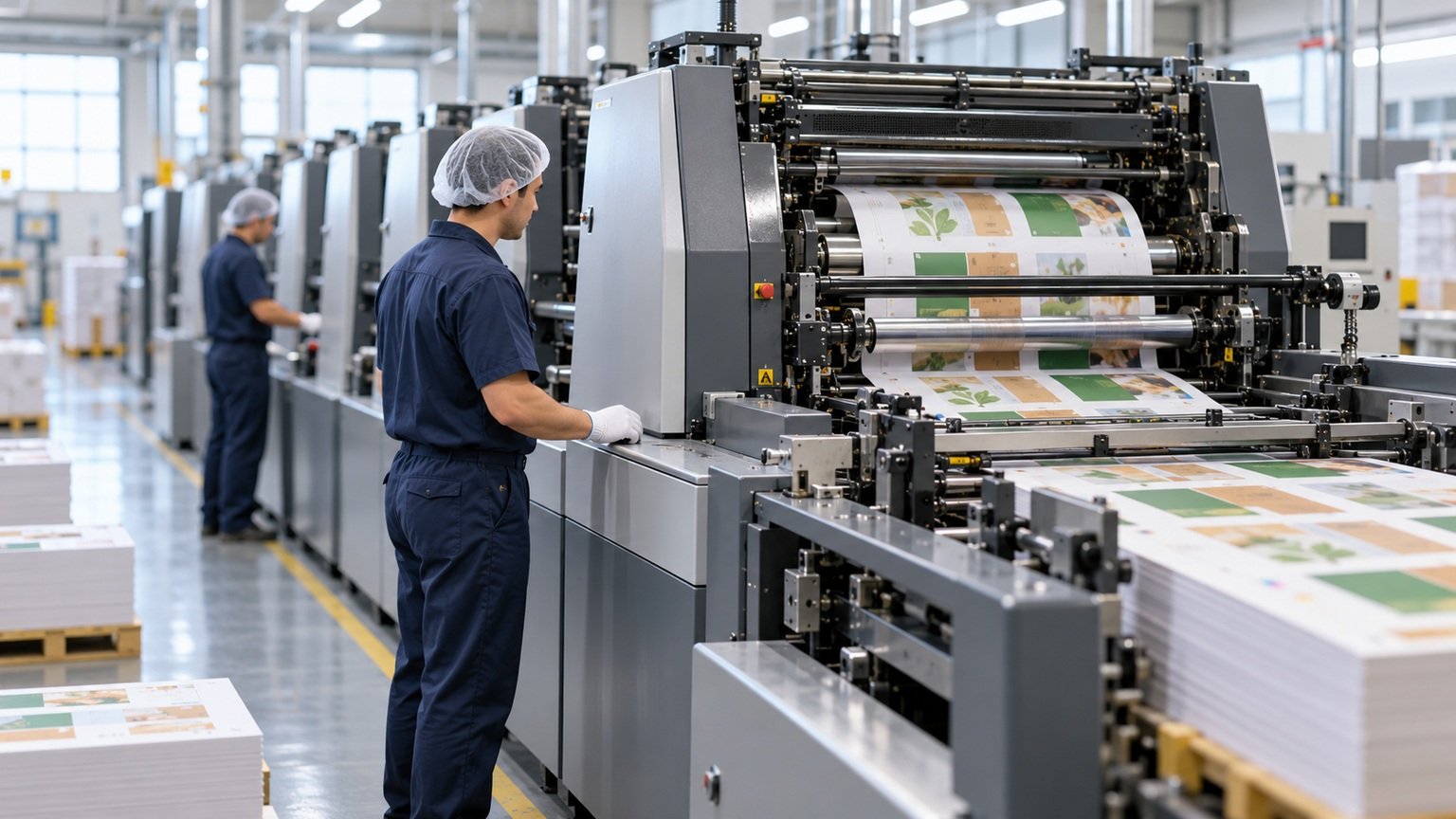
    Offset printing press running in a clean packaging factory
    Offset printing and finishing are done in our own factory.

    3. Forming and assembly

    Boxes are formed, wrapped and assembled with inserts, ribbons, magnets or other components, then inspected. For the detailed steps, read how collapsible rigid boxes are manufactured.

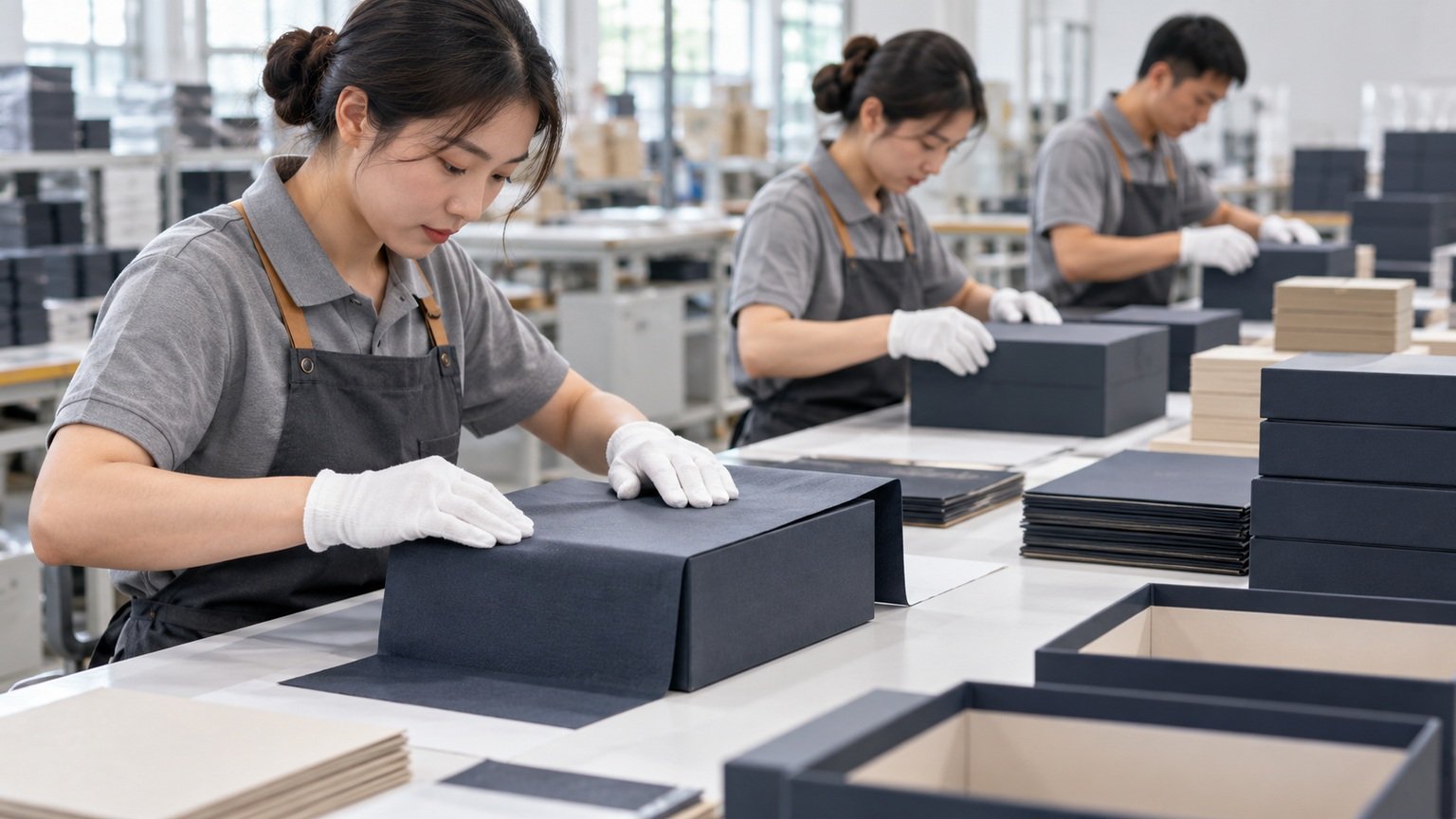
    Workers wrapping and assembling rigid boxes at a bright workbench
    Skilled hands wrap, form and assemble each box.

    4. Inspection and packing

    Incoming materials (IQC), in-process checks (IPQC) and outgoing inspection (OQC) catch problems before goods leave the factory. Finished products are packed for export, flat where the structure allows. See quality control for premium gift boxes and our QC page.

    Typical timeline

    StageTypical time
    Sample (after artwork is final)3 to 5 working days
    Mass production (after sample approval)10 to 20 working days
    ShippingDepends on mode and destination

    See our production capacity page for facility details.

    Frequently asked questions

    How large is your factory?

    Our Dongguan factory covers 12,800 m².

    What is the lead time?

    Typically 10 to 20 working days after sample approval.

    Do you print in-house?

    Printing, finishing, forming and assembly are carried out at our factory under one roof.

    Can I visit or audit the factory?

    Yes. Contact us to arrange a visit or a remote video tour.

    How do you keep quality consistent?

    We use an approved sample as reference and run IQC, IPQC and OQC checks.

    Start your project

    Share your packaging idea and we will plan the sample and schedule.

    索取报价

    索取报价

    请告诉我们您的项目信息。分享您的包装盒样式、尺寸、材料和数量,我们的团队会为您提供定制包装报价。.

    查询表格
  • How Collapsible Rigid Boxes Are Manufactured: Step-by-Step Process

    How Collapsible Rigid Boxes Are Manufactured: Step-by-Step Process

    首页/资源/How Collapsible Rigid Boxes Are Made

    How Collapsible Rigid Boxes Are Manufactured: Step-by-Step Process

    How collapsible rigid boxes are made

    By the Xinhongcai Packaging TeamUpdated 20 October 20268 min read

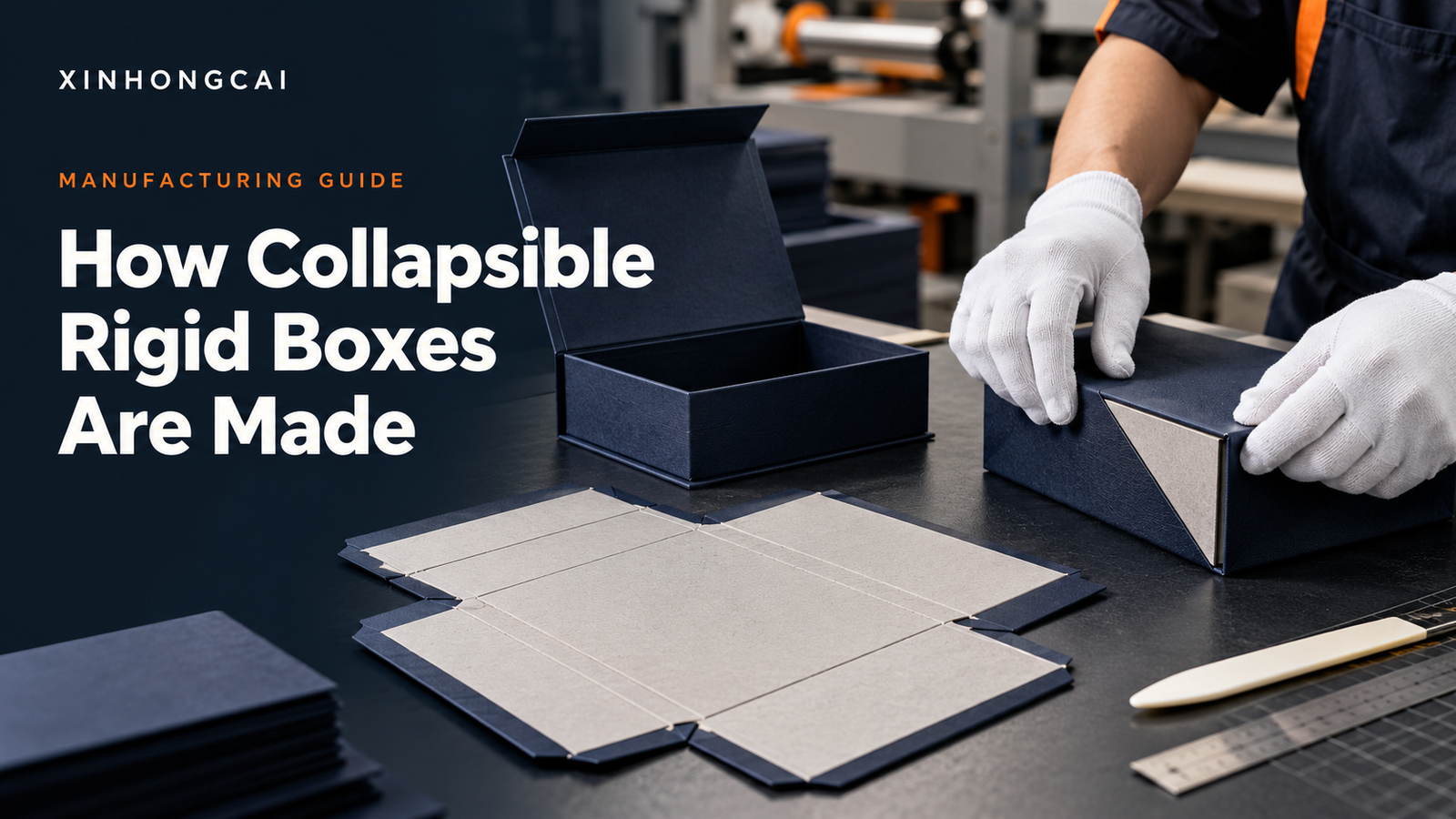
    Collapsible rigid boxes are made in eight main steps: design and sampling, printing, finishing, die-cutting, board preparation, forming and wrapping, assembly of components, and inspection and flat-packing. Each step is checked before the next begins, so the approved sample becomes the standard for the whole production run.

    Key takeaways

    • A physical sample is approved before mass production begins.
    • Printing and finishing happen on the wrap paper before it meets the board.
    • Hinge lines and magnets are the critical points that make the box fold flat and close well.
    • Quality checks run at incoming (IQC), in-process (IPQC) and outgoing (OQC) stages.

    1. Design and sampling

    We confirm internal size, structure (five-, six- or seven-panel, magnetic, handle), board thickness and artwork. A dieline is prepared and a white or printed sample is made for approval. Samples typically take 3 to 5 working days.

    2. Printing

    Artwork is printed on wrap paper, usually by offset printing with a computer-to-plate workflow for accurate color. Pantone matching is used for brand colors.

    3. Finishing

    Printed sheets receive lamination, hot-foil stamping, embossing or debossing, and spot UV as specified. These effects are added to the paper before wrapping so they stay crisp.

    Gold hot-foil stamping on a dark gift box lid, macro view
    Hot-foil stamping is applied to the wrap paper before forming.

    4. Die-cutting and board preparation

    Paper is die-cut to shape and thick paperboard panels are cut and grooved. The groove lines become the hinges that let the box fold flat.

    Thick paperboard sheets being grooved and die-cut on a machine
    Grooved board panels become the hinges that let the box fold flat.

    5. Forming and wrapping

    Board panels are positioned on the printed paper and wrapped with adhesive, with edges turned in for clean corners. Panels are joined with hinge strips or wrapped folds to create the collapsible structure.

    6. Assembly of components

    Magnets, ribbons, windows, handles and inserts are added. Magnet placement is critical for lid alignment, so it is checked on every batch. See what buyers should know about magnetic boxes and our inserts guide.

    7. Inspection and flat-packing

    StageChecks
    IQC (incoming)Board, paper, magnets and inserts against specs
    IPQC (in-process)Color, finishes, glue, corners, fold lines
    OQC (outgoing)Dimensions, appearance, open-close test, carton count

    Approved boxes are folded flat, bundled and cartoned for export. Read more on our quality control and automation and technology pages, or see why flat packing matters in shipping volume.

    Frequently asked questions

    How long does production take?

    Typically 10 to 20 working days after sample approval, depending on quantity and finishes.

    Are collapsible boxes made by hand or machine?

    A combination. Printing, die-cutting and many forming steps are machine-assisted, while wrapping detail, magnets and inspection involve skilled hands.

    How do you make sure each box matches the sample?

    The approved sample is the reference, and IQC, IPQC and OQC checks compare production against it.

    Which certifications does the factory hold?

    ISO 9001, ISO 14001, FSC and amfori BSCI audit status. See our certifications page.

    Can you add inserts and ribbons in the factory?

    Yes. Inserts, ribbons and other components can be assembled before packing.

    See it made for your brand

    Send your artwork and product size to start a sample.

    索取报价

    索取报价

    请告诉我们您的项目信息。分享您的包装盒样式、尺寸、材料和数量,我们的团队会为您提供定制包装报价。.

    查询表格
  • Paper-Based Packaging Trends: What Brands Are Switching To

    Paper-Based Packaging Trends: What Brands Are Switching To

    首页/资源/Paper-Based Packaging Trends

    Paper-Based Packaging Trends: What Brands Are Switching To

    Paper-based packaging trends

    By the Xinhongcai Packaging TeamUpdated 20 October 20267 min read

    Brands are moving toward paper-based packaging by replacing plastic inserts with pulp and cardboard, sourcing certified paper, shipping flat and simplifying finishes. Regulation, retailer requirements and customer expectations are all pushing in the same direction, while premium rigid boxes remain a way to keep a high-end feel.

    Key takeaways

    • Paper pulp and cardboard inserts are replacing foam and plastic in many gift and electronics sets.
    • FSC and similar certification is becoming a standard buyer request.
    • Flat-pack structures cut transport volume and emissions.
    • Fewer, better finishes and reusable boxes give a premium feel with less waste.

    1. Replacing plastic inserts

    Molded pulp and die-cut cardboard now cover many uses that foam once did, from cosmetics trays to electronics holders. Compare options in our packaging inserts guide, or browse custom packaging inserts.

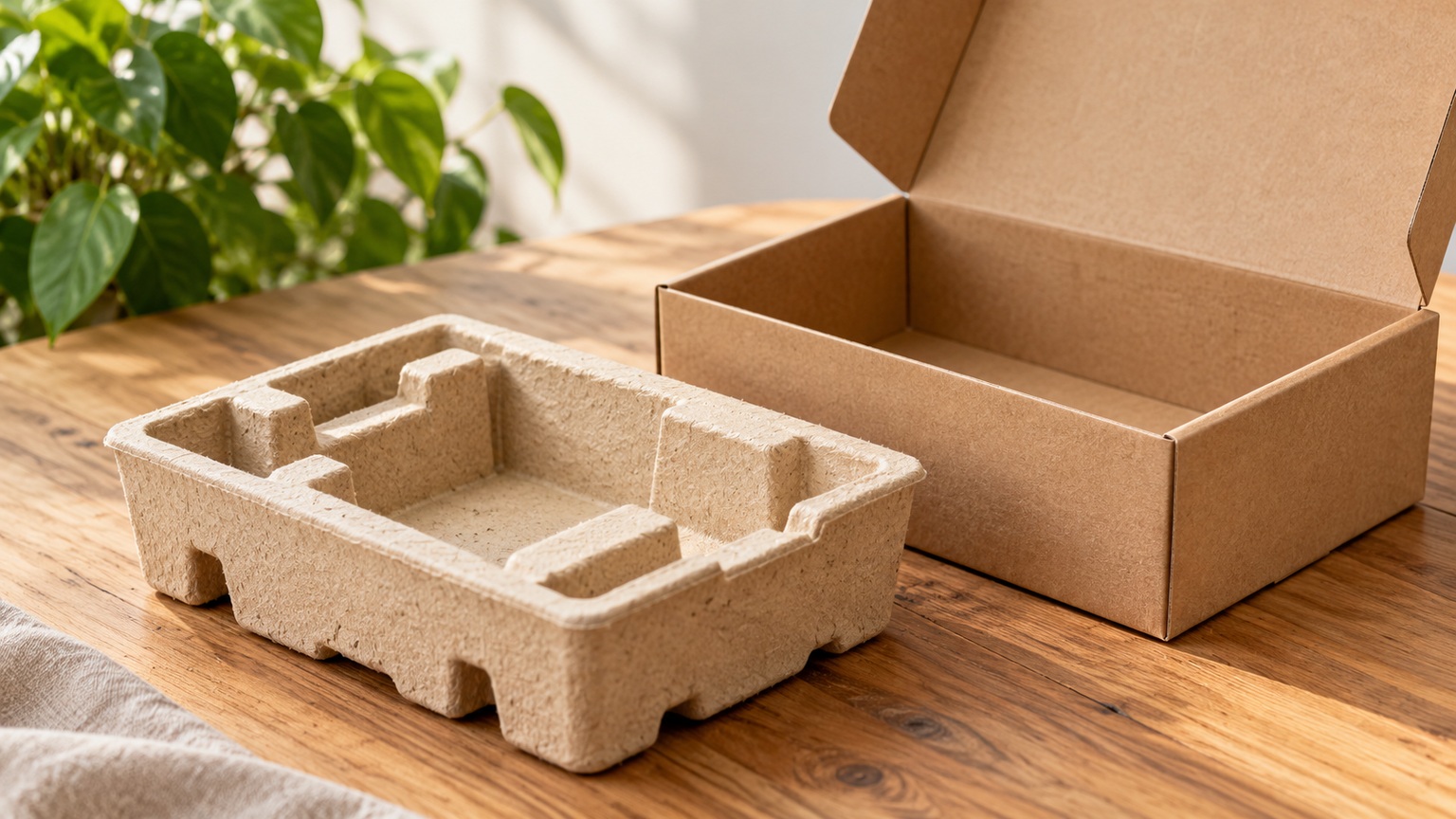
    Molded paper pulp tray and kraft rigid box on a natural wood surface
    Paper pulp inserts replace foam in many gift and electronics sets.

    2. Responsible sourcing and certification

    FSC certification shows that paper comes from responsibly managed forests. Our factory holds FSC certification and also operates under ISO 14001 environmental management; see our certifications.

    Stacks of uncoated paper sheets and rolls for sustainable packaging
    Certified paper supports responsible sourcing.

    3. Efficient logistics

    Transport is a large share of a package's footprint. Flat-pack collapsible rigid boxes reduce the number of shipments for the same quantity. Learn more in how collapsible boxes reduce shipping volume.

    4. Minimal and mono-material design

    Brands are choosing a few quality finishes over many layers. Avoiding plastic windows, heavy laminates and mixed materials makes recycling easier. Uncoated or soft-touch paper, embossing and foil accents can still look premium.

    5. Reusable rigid boxes

    A rigid box that customers keep for storage or gifting extends the brand's exposure and reduces waste per use. Magnetic and drawer styles are popular for this; see magnetic vs non-magnetic boxes.

    6. Regulation and retailer rules

    Rules such as the EU's packaging waste legislation and extended producer responsibility schemes are raising expectations on recyclability and material reduction. Check requirements for each destination market.

    At a glance

    TrendWhat changesBenefit
    Paper insertsPulp or cardboard replace foamRecyclable, plastic-free
    Certified paperFSC board and wrapVerified sourcing
    Flat-packCollapsible structuresLower freight and storage
    Minimal finishesFewer coatings and add-onsEasier recycling, lower cost
    Reusable boxesKeepsake rigid boxesLonger life, brand exposure

    How to start

    1. List the plastic parts in your current pack.
    2. Test paper-based inserts with your product.
    3. Ask for FSC-certified paper.
    4. Choose flat-pack where it fits; see collapsible vs traditional.
    5. Request a sample and compare.

    Frequently asked questions

    Is paper-based packaging as protective as plastic?

    For many products, yes, especially with well-designed pulp or cardboard inserts. Very fragile or heavy items may still need foam; we test with your product.

    Can paper packaging still look premium?

    Yes. Rigid boxes with textured paper, embossing and foil look premium without plastic.

    What does FSC certification mean?

    It shows paper comes from forests managed to FSC standards and tracked through the supply chain.

    Is paper-based packaging more expensive?

    Costs vary. Paper inserts can be cost-competitive, and flat-pack boxes can reduce freight and storage.

    How do I know what regulations apply?

    It depends on the destination market. Check local packaging and EPR rules, and ask us about material options.

    Go paper-based

    Tell us your product and sustainability goals and we will suggest materials.

    索取报价

    索取报价

    请告诉我们您的项目信息。分享您的包装盒样式、尺寸、材料和数量,我们的团队会为您提供定制包装报价。.
    查询表格
  • Magnetic Box vs Non-Magnetic Box: Differences, Cost and How to Choose

    Magnetic Box vs Non-Magnetic Box: Differences, Cost and How to Choose

    首页/资源/Magnetic vs Non-Magnetic Box

    Magnetic Box vs Non-Magnetic Box: Differences, Cost and How to Choose

    Magnetic vs lift-off rigid boxes

    By the Xinhongcai Packaging TeamUpdated 20 October 20266 min read

    A magnetic box closes with hidden magnets for a secure, premium feel; a non-magnetic box uses a friction fit, tuck, ribbon or lid-and-base design that is simpler and usually cheaper. Choose magnetic when the opening experience is part of the brand; choose non-magnetic when cost, speed or ease of filling comes first.

    Key takeaways

    • Magnetic: tidy, secure, premium, slightly higher cost.
    • Non-magnetic: simple, economical, easy to fill, more style variety.
    • Both can be rigid, printed, foil-stamped, embossed and fitted with inserts.
    • Both exist as collapsible, flat-shipping versions.
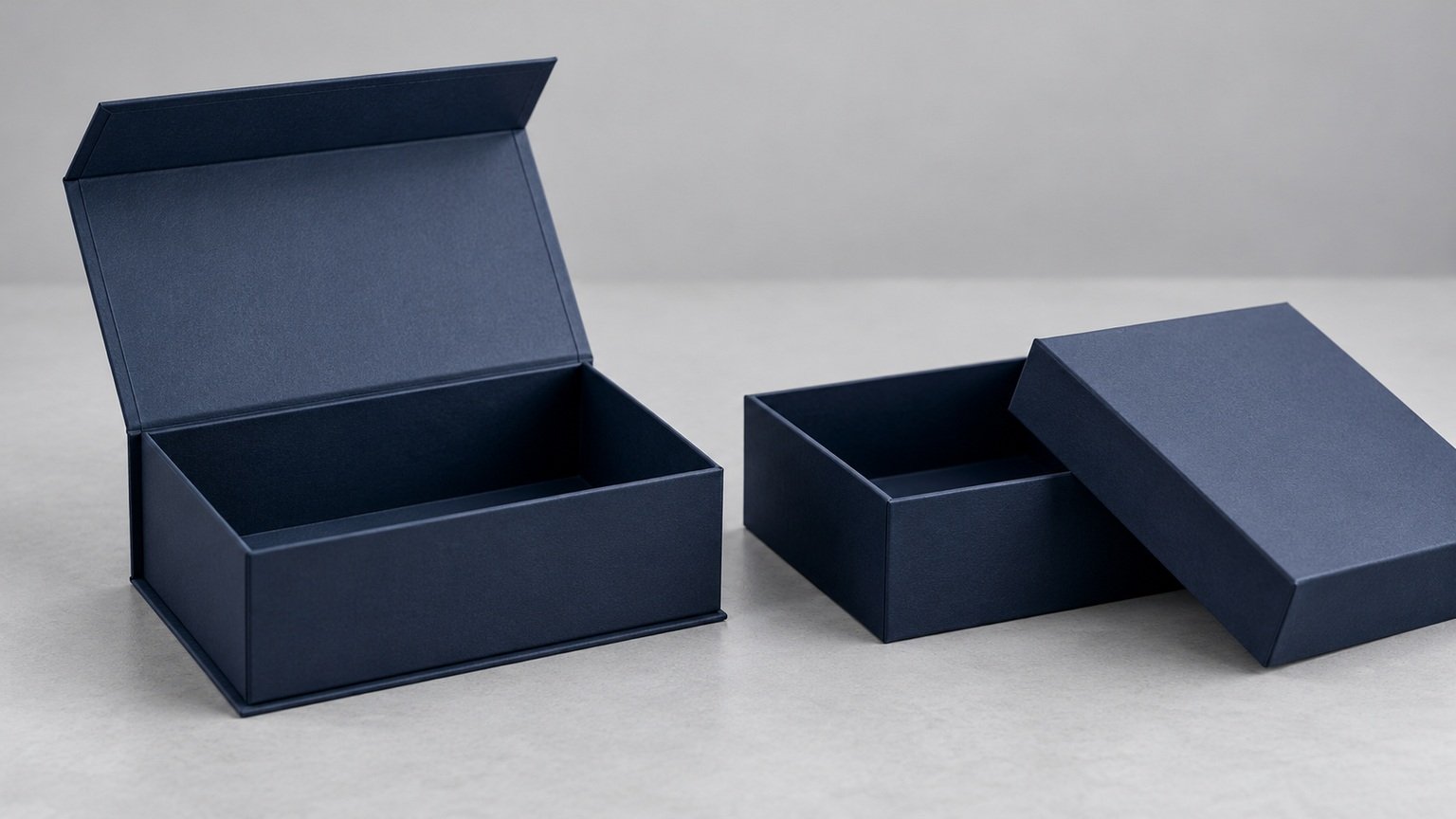
    Magnetic flap-lid gift box and lid-and-base gift box side by side
    Magnetic closure (left) and lid-and-base closure (right).

    Side-by-side comparison

    FactorMagnetic boxNon-magnetic box
    ClosureHidden magnets in lid and baseFriction fit, tuck, ribbon, lid-and-base, drawer
    FeelSoft click, tidy alignmentVaries by structure
    Security in transitHighMedium to high (with ribbon or sleeve)
    Unit costHigherLower
    Best forPremium unboxing, beauty, electronicsWide budgets, apparel, food gifts, retail
    Magnet-sensitive productsNeeds checkingNo issue
    Flat-shipping optionYesYes

    Magnetic boxes

    Small magnets are embedded in the board and concealed by the wrap. Typical formats include flap-lid, book-style and shoulder-neck designs. See collapsible magnetic boxes and book open style boxes. For specs and limits, read what buyers should know.

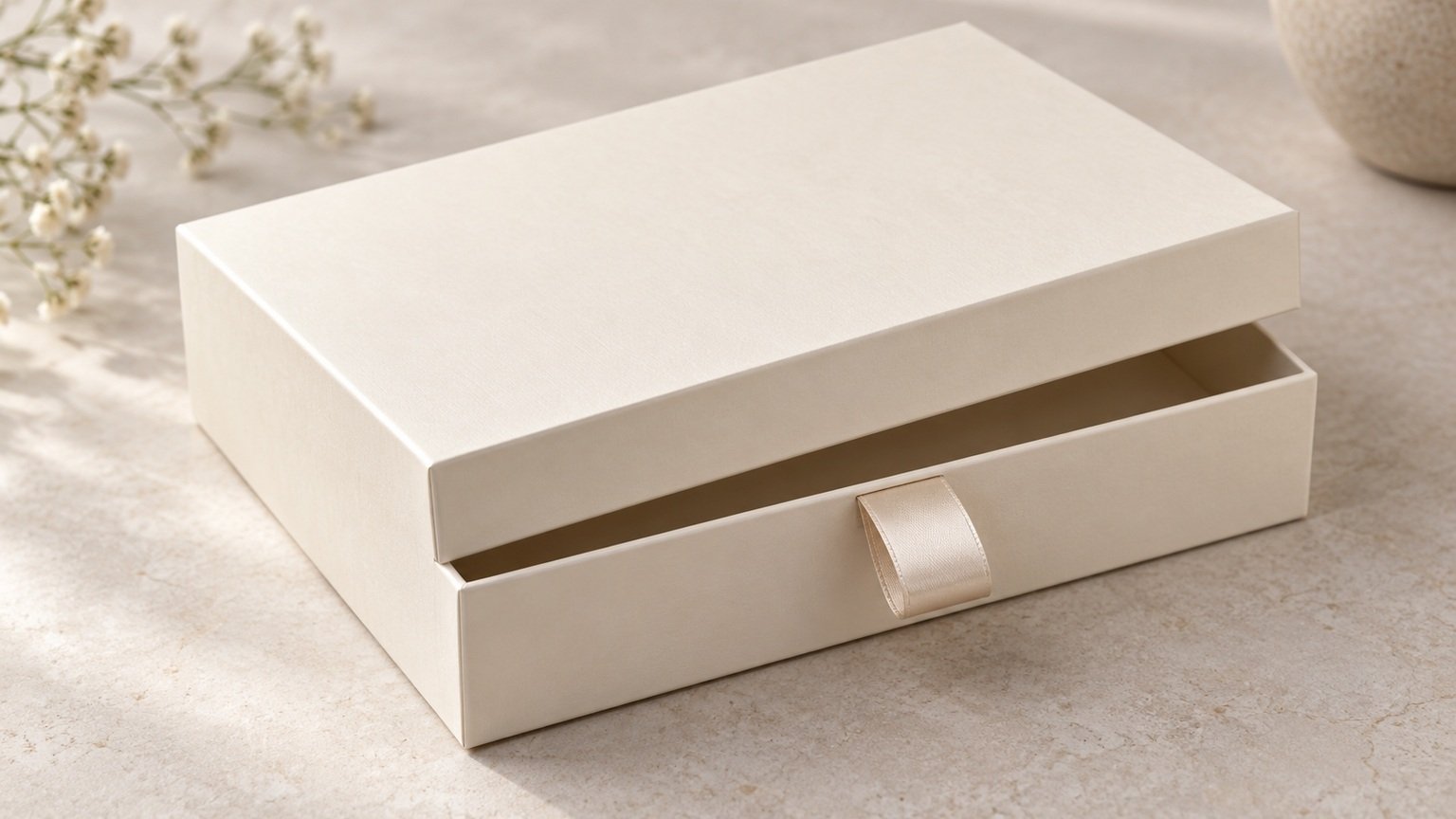
    Cream lid-and-base rigid gift box with a satin ribbon pull
    A ribbon pull lifts a non-magnetic lid-and-base box.

    Non-magnetic boxes

    These rely on structure rather than magnets: lid and base boxes, drawer boxes, double-door rigid boxes and tuck or ribbon closures. They are quick to fill, flexible in shape and often cost less. Add a ribbon, sleeve or window to lift the presentation.

    How to choose

    1. Brand position: luxury or hero product points to magnetic.
    2. Budget: tight budgets favor non-magnetic.
    3. Product: avoid magnets near magnetic-sensitive items.
    4. Volume and shipping: large international orders benefit from collapsible versions of either type; see reducing shipping costs.
    5. Reuse: magnetic boxes are often kept as storage, extending brand exposure.

    Not sure? Request a quote for both and compare with a sample.

    Frequently asked questions

    Is a magnetic box stronger?

    Strength comes from the board and structure, not the magnet. The magnet gives a more secure, tidy closure.

    How much more does a magnetic closure cost?

    Usually a modest amount per box for magnets and assembly; the exact difference depends on size and quantity.

    Can non-magnetic boxes look premium?

    Yes. With quality paper, foil, embossing, ribbon and a fitted insert, lid-and-base and drawer boxes look very premium.

    Are magnets safe for electronics?

    Small closure magnets are generally safe, but tell us the product so we can confirm placement.

    Do both ship flat?

    Collapsible versions of both ship flat; fixed rigid boxes ship assembled.

    Compare both options

    Tell us your product and budget and we will quote magnetic and non-magnetic versions.

    索取报价

    索取报价

    请告诉我们您的项目信息。分享您的包装盒样式、尺寸、材料和数量,我们的团队会为您提供定制包装报价。.
    查询表格
  • Packaging Inserts Guide: EVA, Sponge, EPE, Pulp and Cardboard Compared

    Packaging Inserts Guide: EVA, Sponge, EPE, Pulp and Cardboard Compared

    首页/资源/Packaging Inserts Guide

    Packaging Inserts Guide: EVA, Sponge, EPE, Pulp and Cardboard Compared

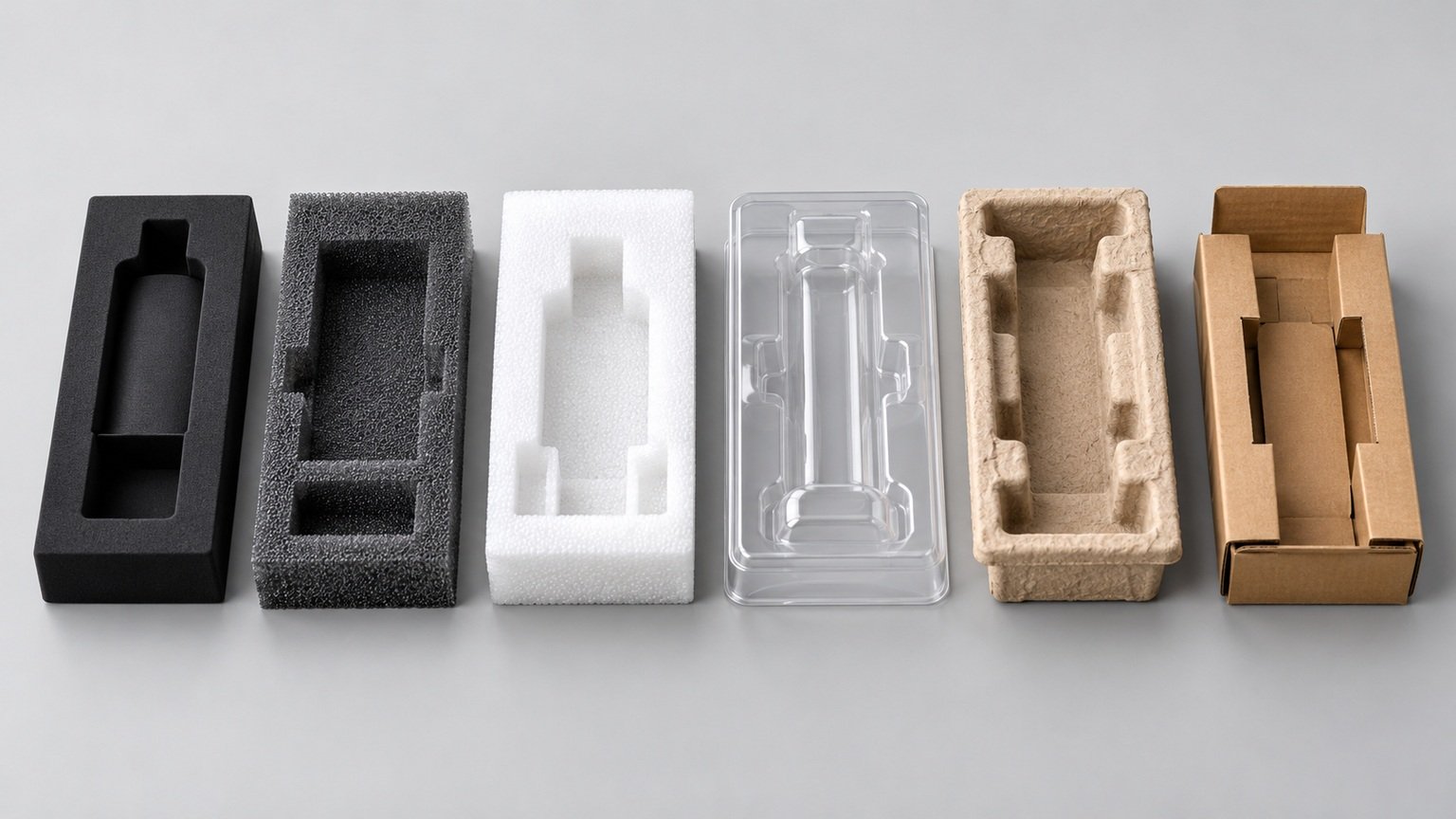
    Packaging inserts material showcase

    By the Xinhongcai Packaging TeamUpdated 20 October 20267 min read

    The right packaging insert holds the product in place, protects it in transit and completes the unboxing. The main options are EVA foam, sponge, EPE foam, blister trays, paper pulp and cardboard. Choose by product weight and fragility, the look you want, budget and sustainability goals.

    Key takeaways

    • EVA gives a soft, precise, premium look for gifts, cosmetics and electronics.
    • Sponge and EPE give the most cushioning for fragile or heavy items.
    • Paper pulp and cardboard are paper-based, recyclable options that flatten well.
    • Send product samples or CAD so inserts are cut to fit within tolerance.

    Insert types compared

    InsertProtectionLook and feelSustainabilityBest for
    EVA foamGoodSoft, precise, premiumPlastic-basedCosmetics, jewelry, electronics
    SpongeHigh cushioningBasicPlastic-basedFragile or heavy items
    EPE foamHigh cushioningBasic to neatPlastic-based, recyclable in some regionsFragile products, shipping protection
    Blister trayGood shape holdClean, moldedPlastic-basedSets of small items
    Paper pulpGoodNatural, moldedPaper-based, recyclableEco brands, electronics, bottles
    CardboardModerateClean, printablePaper-based, recyclableLight products, dividers, flat shipping
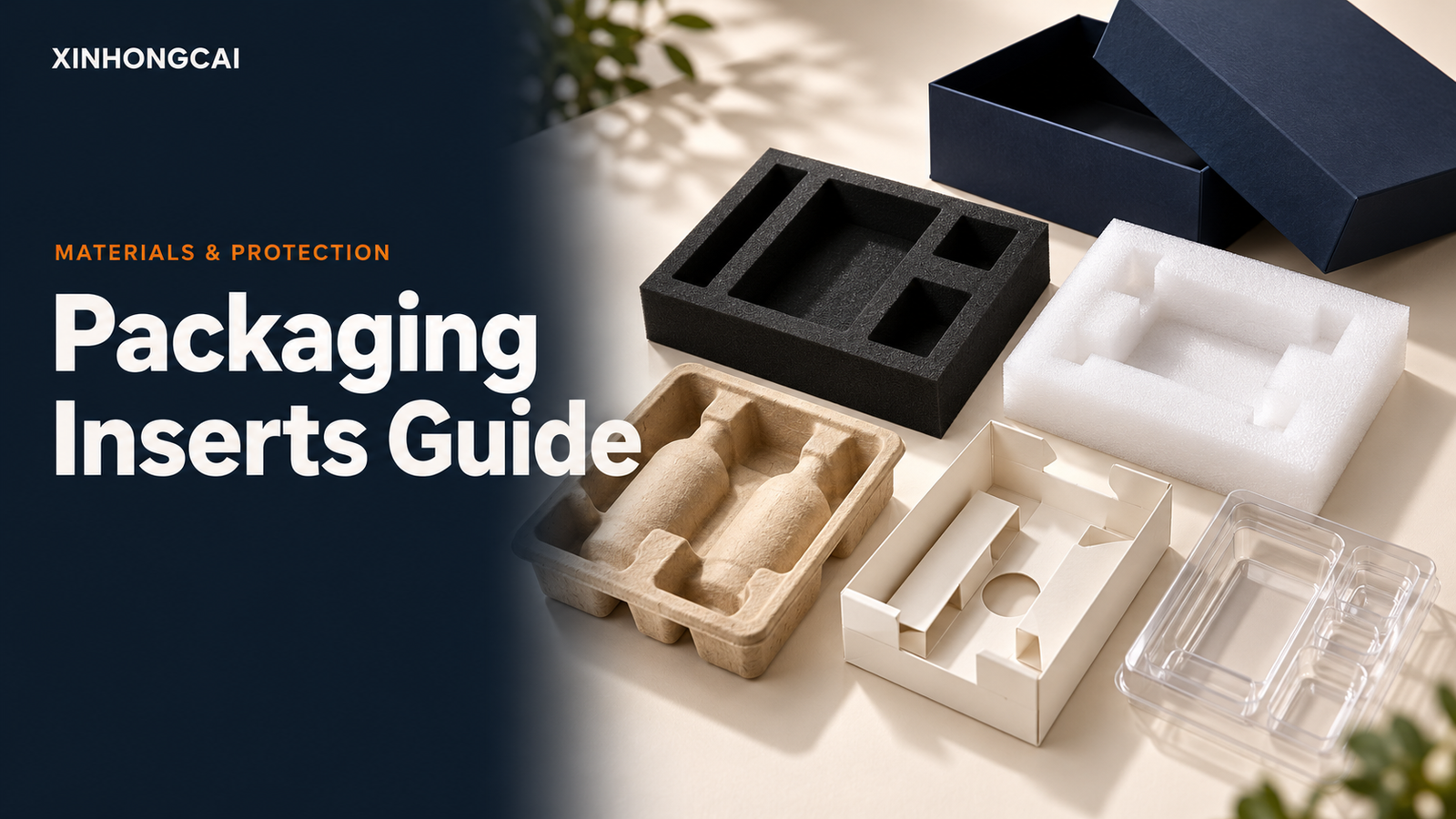
    Six packaging insert materials in a row: EVA, sponge, EPE, blister tray, paper pulp and cardboard
    The main insert materials, from foam to paper pulp.

    Each type explained

    EVA foam

    EVA is cut or molded with a smooth finish and can be color matched. It lines rigid boxes elegantly and is a favorite for premium gifts.

    Sponge and EPE

    These absorb shock. EPE foam is light and resilient; sponge is dense and soft. Use them for fragile items or when parcels face rough handling.

    Blister trays

    Vacuum-formed trays hold small items in fixed positions, ideal for sets and kits.

    Paper pulp and cardboard

    Molded pulp and die-cut cardboard replace plastic where possible. They also support flat shipping and responsible sourcing; see paper-based packaging trends.

    Black EVA insert in a rigid gift box holding a perfume bottle and accessories
    A fitted EVA insert gives a precise, premium presentation.

    How to choose an insert

    1. Weight and fragility: heavy or fragile items need EPE, sponge or thick EVA.
    2. Brand look: premium products benefit from EVA or velvet-covered inserts.
    3. Sustainability: choose pulp or cardboard if reducing plastic is a goal.
    4. Shipping: flat inserts suit lower freight cost.
    5. Budget: cardboard and simple foam are most economical.

    Design tips

    • Provide product samples or 3D files for precise cavities.
    • Allow a small tolerance so products slide in easily but do not rattle.
    • Add a finger notch or ribbon pull for easy removal.
    • Pair with the right box: collapsible rigid boxes and lid and base boxes both accept fitted inserts.

    Browse our custom packaging inserts.

    Frequently asked questions

    Which insert is best for a premium look?

    EVA, often covered or color matched, gives the most refined, premium appearance.

    Which insert is the most eco-friendly?

    Paper pulp and cardboard are paper-based and recyclable, so they are the most sustainable choices.

    Which protects fragile products best?

    EPE foam and sponge provide the highest cushioning.

    Can inserts be customized to my product?

    Yes, cavities are cut or molded to your product dimensions.

    Do inserts affect shipping cost?

    Yes. Thick foam adds volume, while flat pulp or cardboard inserts keep packs compact.

    Need a fitted insert?

    Send your product sample or size and we will propose the right material.

    See All Inserts

    索取报价

    请告诉我们您的项目信息。分享您的包装盒样式、尺寸、材料和数量,我们的团队会为您提供定制包装报价。.
    查询表格
  • How to Optimize Packaging Warehouse Space: 7 Proven Methods

    How to Optimize Packaging Warehouse Space: 7 Proven Methods

    首页/资源/Optimize Warehouse Space

    How to Optimize Packaging Warehouse Space: 7 Proven Methods

    Smarter storage, better packaging

    By the Xinhongcai Packaging TeamUpdated 20 October 20266 min read

    To optimize packaging warehouse space, store packaging flat, use vertical racking, stage stock by campaign and deliver in planned batches. Premium rigid boxes are bulky; stored assembled they can fill a warehouse quickly. Flat-pack collapsible boxes and good storage discipline can free a large share of that space.

    Key takeaways

    • Flat-pack storage is the biggest single space saver.
    • Use height: pallet racking beats floor stacking for packaging.
    • Stage by campaign and label cartons so picking is fast.
    • Split deliveries so only what is needed is on site.
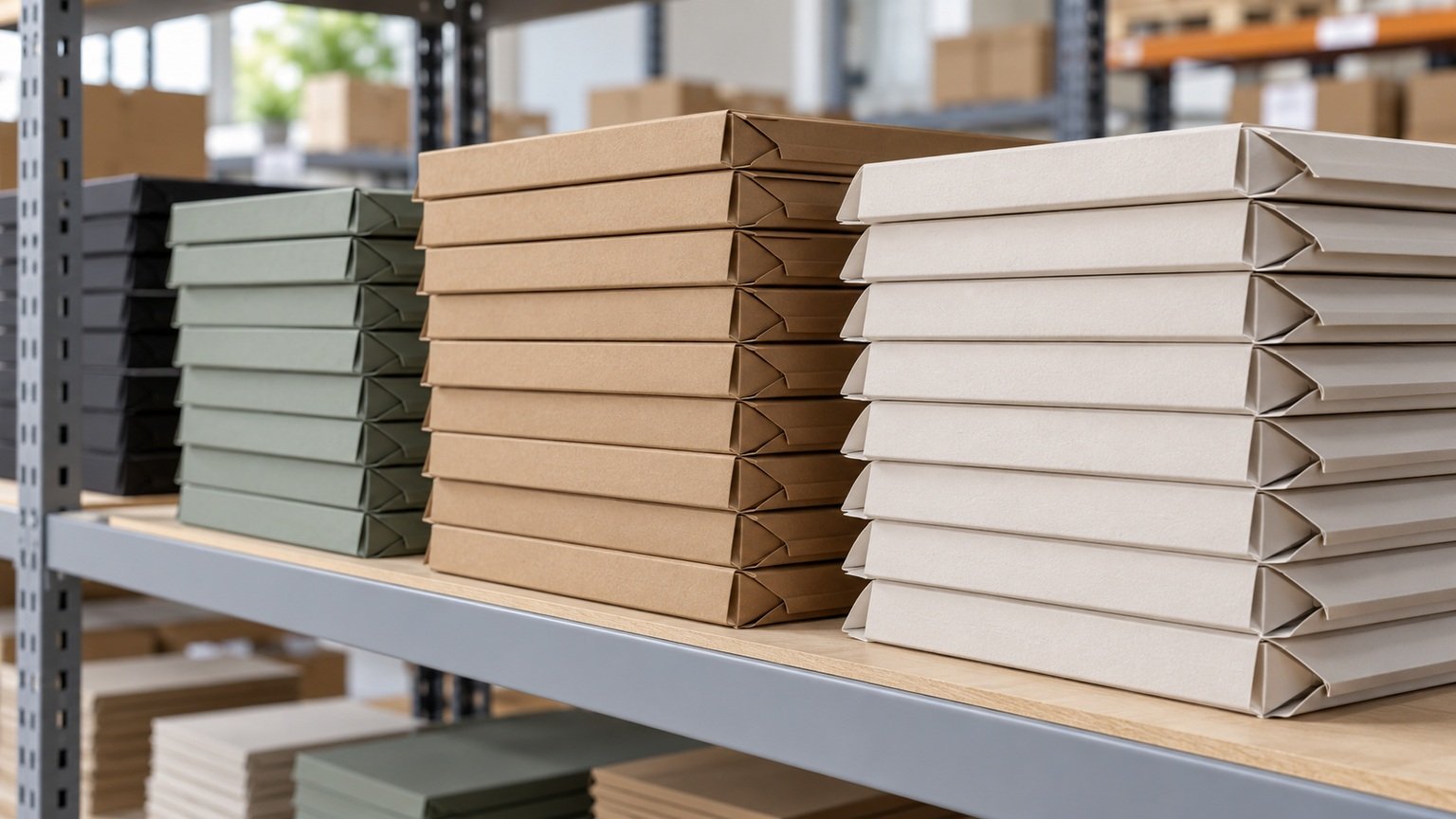
    Tall neat stacks of flat-packed rigid boxes on a warehouse shelf
    Flat-packed boxes take a fraction of the shelf space of assembled ones.

    1. Store flat

    Collapsible rigid boxes stay flat until needed, so a pallet holds many more units than assembled boxes. See how collapsible boxes reduce volume.

    2. Go vertical

    Use pallet racking for slow-moving packaging and keep fast movers at pick height. Packaging is light, so height is usually safe within rack load limits.

    3. Stage by campaign

    Group stock for each launch, holiday or customer so one zone holds everything for that campaign: boxes, inserts, ribbons and labels.

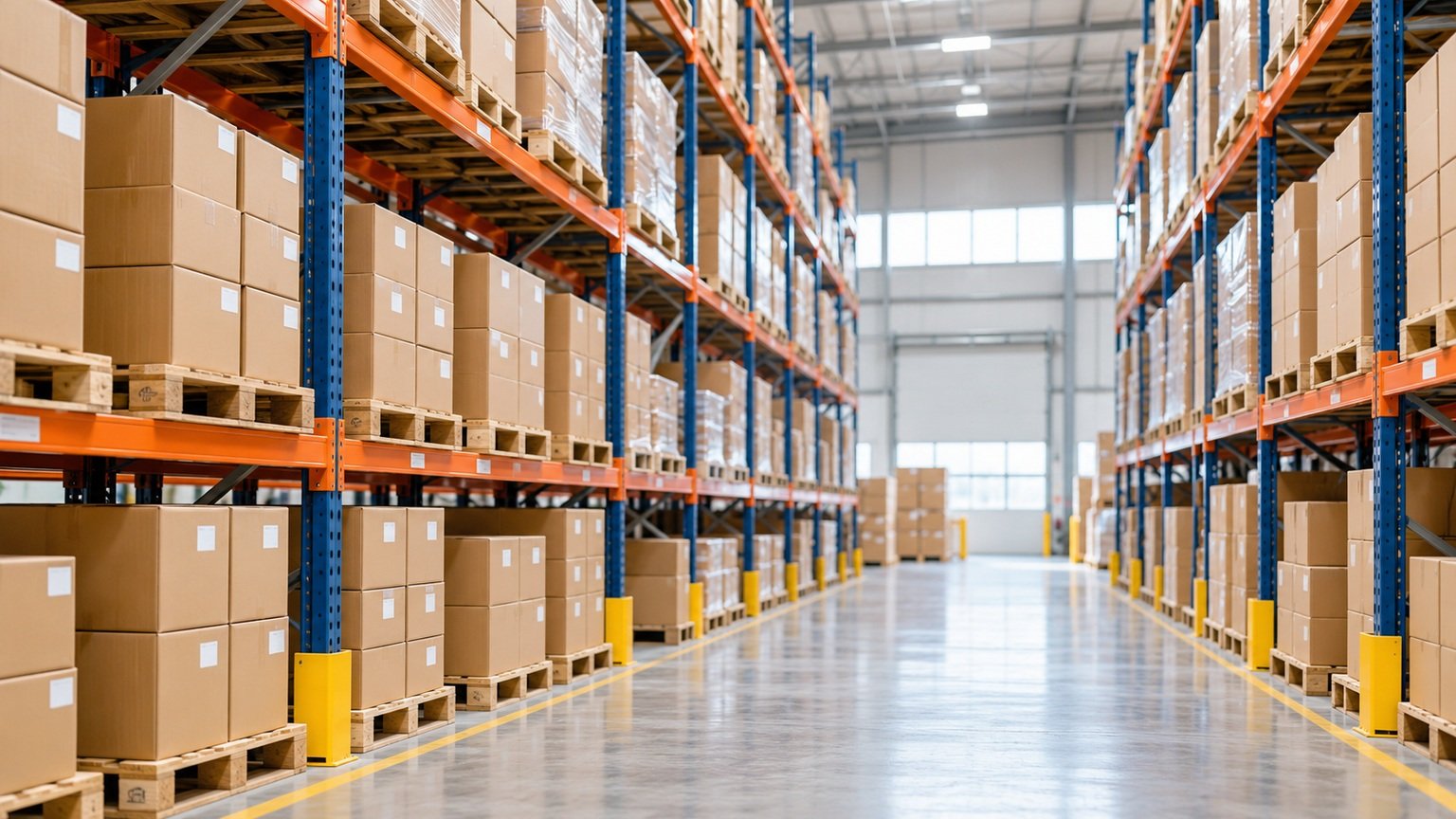
    Organized warehouse pallet racking with labeled packaging cartons
    Racking, labels and campaign zones make packaging easy to find.

    4. Label cartons and map locations

    Print SKU, quantity and campaign on two sides of each carton. A simple location map cuts search time and mispicks.

    5. Right-size boxes and inserts

    Smaller, tighter boxes use less space everywhere. Use slim pulp or cardboard inserts; see the inserts guide.

    6. Rotate stock

    Use first-in, first-out so older packaging does not sit behind new deliveries, and review obsolete designs each quarter.

    7. Split deliveries

    Ask your supplier to ship in batches that match your fulfillment schedule. See our production capacity and shipping cost tactics.

    Space saved: a simple way to estimate

    StepWhat to measure
    1Pallet footprint and usable height
    2Units per pallet, assembled vs flat
    3Pallet positions needed for your peak stock
    4Cost per pallet position per month

    Multiply positions saved by storage cost to see the monthly benefit.

    Frequently asked questions

    How much space do collapsible boxes save?

    They store flat, so a pallet can hold many times more boxes than a pallet of assembled boxes. The ratio depends on the box design.

    Do I need special racking?

    No. Standard pallet racking works; keep within the rack's load rating.

    How should I store seasonal packaging?

    Keep it compact and labeled, in a campaign zone, and release it only when needed.

    Can you ship in smaller batches?

    Yes. We can split deliveries to match your schedule; tell us your timeline.

    Save warehouse space

    Ask for flat-pack options and carton plans for your next order.

    索取报价

    索取报价

    请告诉我们您的项目信息。分享您的包装盒样式、尺寸、材料和数量,我们的团队会为您提供定制包装报价。.

    查询表格
  • How to Reduce Packaging Shipping Costs: 8 Practical Tactics

    How to Reduce Packaging Shipping Costs: 8 Practical Tactics

    首页/资源/Reduce Packaging Shipping Costs

    How to Reduce Packaging Shipping Costs: 8 Practical Tactics

    Right-sized packaging for smoother shipping

    By the Xinhongcai Packaging TeamUpdated 20 October 20268 min read

    The fastest way to reduce packaging shipping costs is to ship less air. Freight is billed on the larger of weight or volume, and rigid boxes are bulky but light. Flat-pack structures, right-sized boxes, optimized cartons and the right shipping terms together can cut the cost per unit significantly.

    Key takeaways

    • Volume, not weight, usually sets the price for rigid packaging.
    • Collapsible structures and right-sizing give the biggest savings.
    • Plan cartons around pallet and container dimensions.
    • Compare quotes on landed cost per unit, including freight and storage.

    1. Use flat-pack structures

    Collapsible rigid boxes ship flat, so many more units fit per carton. See the mechanics in how collapsible boxes reduce shipping volume.

    2. Right-size the box and insert

    Every extra centimeter of empty space is charged. Match internal size to the product, and use slim inserts. Pulp or cardboard inserts can be thinner than foam and flatten well. See the inserts guide.

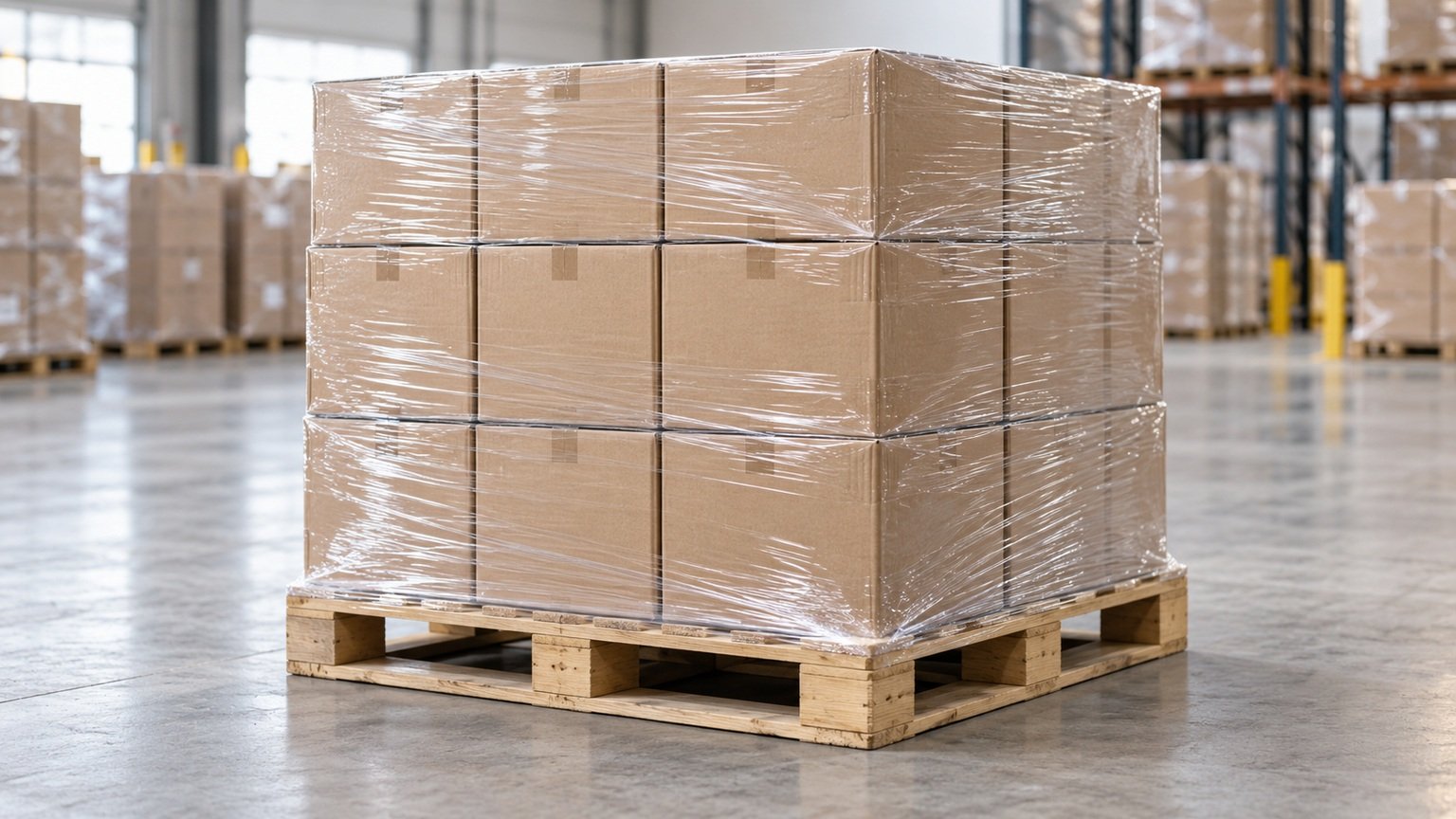
    Stretch-wrapped pallet of uniform export cartons in a clean warehouse
    Uniform cartons that tile the pallet cut wasted space.

    3. Plan carton and pallet dimensions

    Design the export carton so it tiles a standard pallet and container without gaps. Ask your supplier for units per carton, carton size, gross weight and cartons per pallet. Understand dimensional weight before you set carton sizes.

    4. Choose lighter materials where possible

    Where weight is charged, use thinner board for lightweight products or switch heavy inserts to paper-based ones. Keep strength where it protects the product.

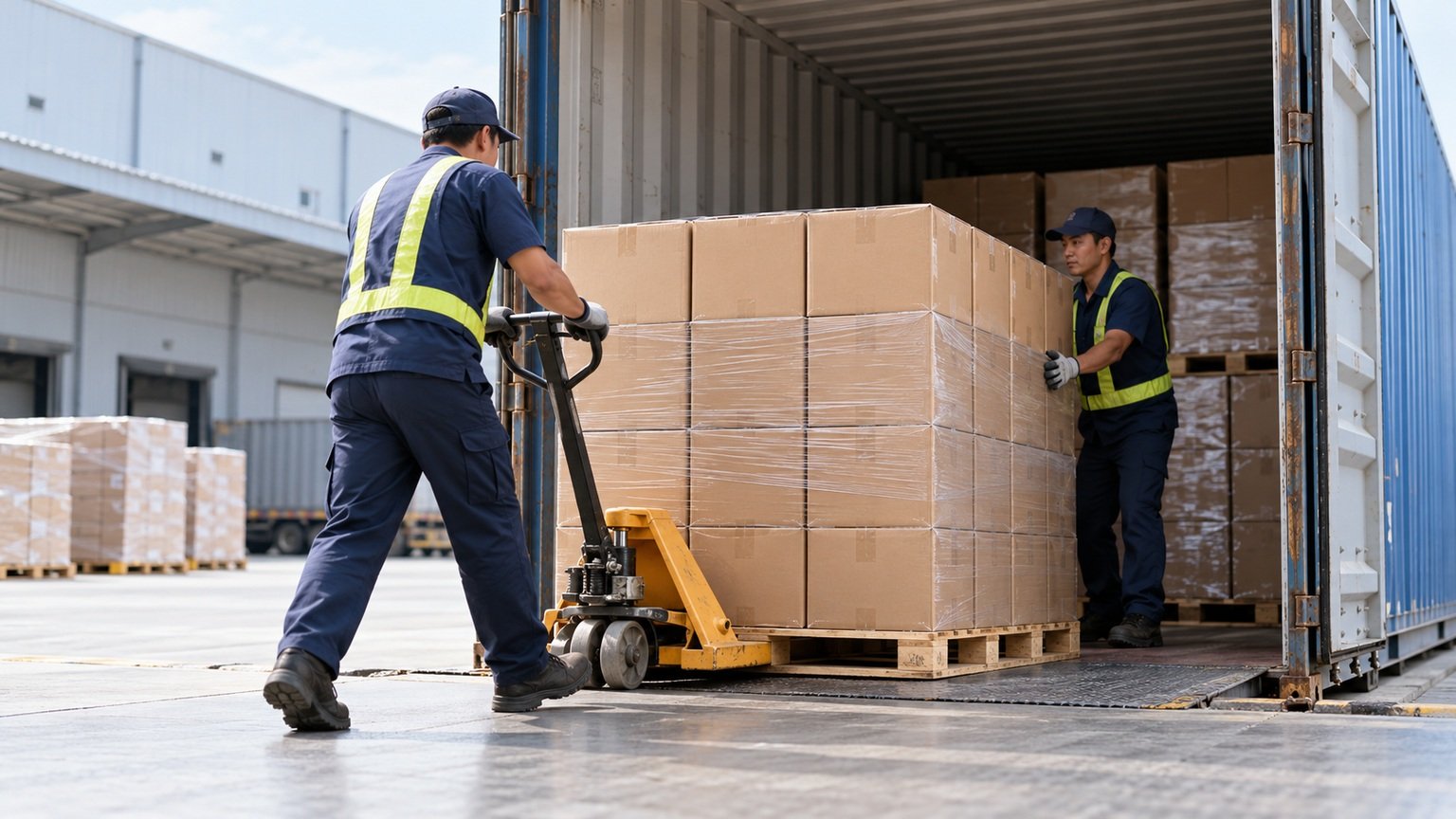
    Cartons being loaded into a shipping container at a warehouse dock
    Sea freight is the lowest-cost option for planned orders.

    5. Match shipping mode to urgency

    ModeCostBest for
    Sea (LCL/FCL)Lowest per unitPlanned, large orders
    RailMidAsia to Europe lanes
    AirHighest, volume-sensitiveUrgent or small batches

    Flat-packing helps all modes, and especially air.

    6. Consolidate orders

    Combine boxes, inserts and labels in one shipment, and order seasonal packaging early enough for sea freight rather than air.

    7. Choose the right Incoterms

    FOB, EXW, CIF and DDP split costs and risk differently. Know what each includes: Incoterms. We can quote on the term that fits your forwarder.

    8. Compare landed cost, not unit price

    Landed cost per unit = box price + freight + duties + storage + handling. A slightly higher unit price on a flat-pack box often wins overall. See collapsible vs traditional rigid box and warehouse space optimization.

    Frequently asked questions

    What is the biggest factor in packaging freight cost?

    Volume. Rigid boxes are light but bulky, so the space they occupy usually determines the price.

    Do collapsible boxes always cost less to ship?

    Almost always per unit, because they take less space. Savings grow with quantity and distance.

    Should I ship by sea or air?

    Sea is cheapest for planned orders. Use air only for urgent or small batches.

    What should I ask my supplier for?

    Units per carton, carton dimensions, gross weight per carton and cartons per pallet.

    Can you quote different shipping terms?

    Yes. Tell us your forwarder and preferred Incoterm.

    Lower your landed cost

    Share size, quantity and destination and we will quote with carton details.

    Talk to Our Team

    索取报价

    请告诉我们您的项目信息。分享您的包装盒样式、尺寸、材料和数量,我们的团队会为您提供定制包装报价。.

    查询表格
  • Collapsible Magnetic Box: What Buyers Should Know Before Ordering

    Collapsible Magnetic Box: What Buyers Should Know Before Ordering

    首页/资源/Collapsible Magnetic Box

    Collapsible Magnetic Box: What Buyers Should Know Before Ordering

    Premium collapsible magnetic boxes

    By the Xinhongcai Packaging TeamUpdated 20 October 20267 min read

    A collapsible magnetic box is a rigid gift box that folds flat for shipping and closes with hidden magnets when opened. It combines the satisfying, secure closure of a premium magnetic box with flat-pack freight savings. It suits beauty sets, electronics, apparel and gifts where the unboxing experience matters.

    Key takeaways

    • Magnets are concealed inside the board and wrapped, so the exterior stays clean.
    • The box ships flat and sets up in seconds, cutting freight and storage.
    • Magnet strength, board thickness and lid fit should be confirmed on a sample.
    • Very heavy products and tight budgets may suit other closures better.

    How a collapsible magnetic box works

    Thick paperboard panels are joined with wrapped hinge lines. Small magnets are embedded in the lid flap and the matching base panel. When you lift the sides, the box forms and the magnets pull the lid shut with a soft click. Flattened, the box stores and ships like a stack of boards. Browse our collapsible magnetic boxes.

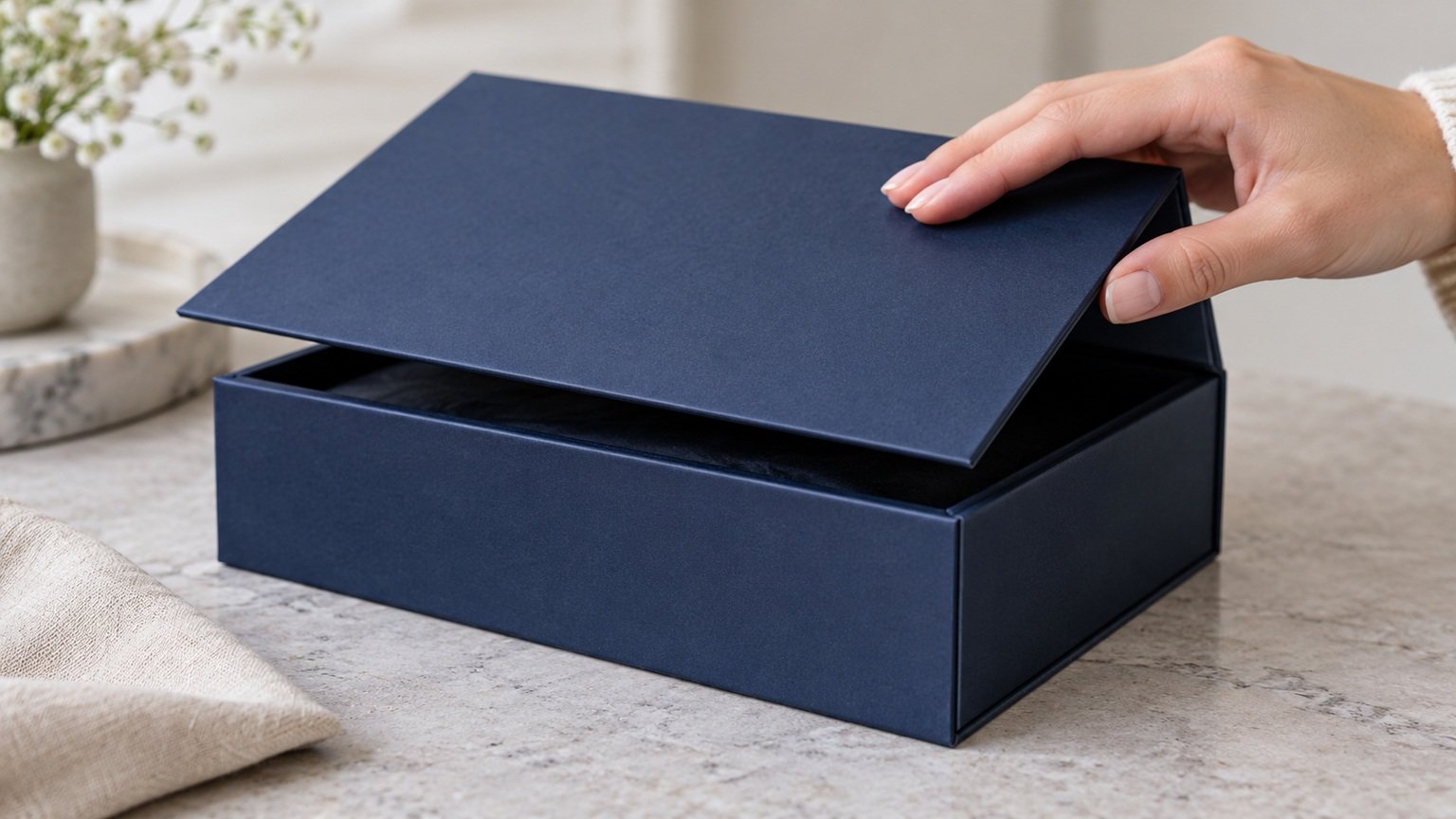
    Hand closing the lid of a navy rigid gift box with a magnetic flap
    Hidden magnets pull the lid shut with a soft click.

    Where they work well

    • Beauty and skincare sets: clean look, reusable keepsake.
    • Electronics and accessories: secure closure with a fitted insert.
    • Apparel, scarves and gift sets: premium retail presentation.
    • Corporate and festive gifting: large seasonal runs where freight matters.

    See industry examples such as cosmetics packaging and electronics packaging.

    Open magnetic gift box with a fitted insert holding a skincare set
    A fitted insert holds the product and completes the unboxing.

    What to specify

    ItemWhy it matters
    Internal dimensionsDefines fit with insert and product
    Board thicknessAffects rigidity and feel
    Magnet size and numberControls closure strength and lid alignment
    Wrap paper and finishSets the brand look: matte, texture, foil, emboss, spot UV
    Insert typeEVA, pulp or cardboard to hold the product
    ExtrasRibbon pull, window, magnetic flap, handle

    What drives cost

    Price rises with box size, board thickness, number of finishes, inserts and special parts such as ribbons. Quantity matters most: larger runs spread tooling and setup. Freight is often lower than for assembled boxes; see how collapsible boxes reduce shipping volume.

    Limits to consider

    • Very heavy contents can stress hinge lines; a fixed rigid box may be better. See collapsible vs traditional.
    • Magnets are not suitable near magnetic-sensitive products such as some cards or devices; tell us your product.
    • Air shipping of magnets can have carrier rules; confirm with your forwarder.

    Pre-order checklist

    1. Confirm internal size and product weight.
    2. Choose paper, finishes and insert.
    3. Ask for a sample to test lid alignment and closure feel.
    4. Confirm units per export carton and shipping method.
    5. Review the quality control steps.

    Compare closures in Magnetic Box vs Non-Magnetic Box.

    Frequently asked questions

    Are the magnets visible?

    No. They are embedded in the board and covered by the wrap paper.

    Can magnetic boxes be shipped flat?

    Yes, that is the purpose of the collapsible structure.

    Will magnets damage electronics or cards?

    Small closure magnets are generally safe, but tell us the product so we can place or size magnets accordingly and test a sample.

    Is a magnetic box more expensive?

    Usually slightly, because of magnets and extra assembly, but flat-pack freight can offset the difference on larger orders.

    Can I add a ribbon or window?

    Yes, subject to the structure; confirm on the dieline.

    Need a magnetic box sample?

    Send your product specs and we will propose a structure and magnet layout.

    索取报价

    索取报价

    请告诉我们您的项目信息。分享您的包装盒样式、尺寸、材料和数量,我们的团队会为您提供定制包装报价。.

    查询表格