
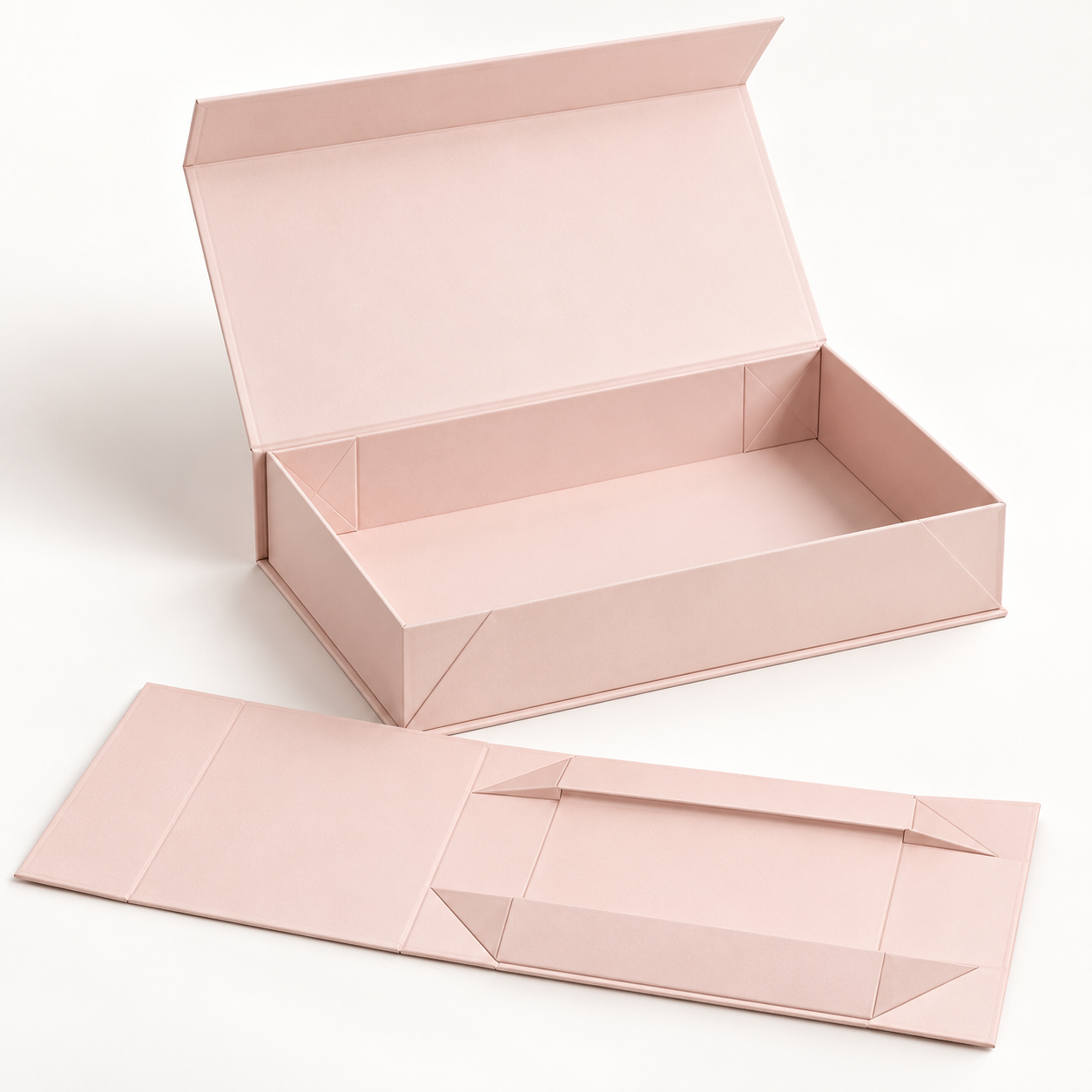


Brands are moving toward paper-based packaging by replacing plastic inserts with pulp and cardboard, sourcing certified paper, shipping flat and simplifying finishes. Regulation, retailer requirements and customer expectations are all pushing in the same direction, while premium rigid boxes remain a way to keep a high-end feel.
Key takeaways
- Paper pulp and cardboard inserts are replacing foam and plastic in many gift and electronics sets.
- FSC and similar certification is becoming a standard buyer request.
- Flat-pack structures cut transport volume and emissions.
- Fewer, better finishes and reusable boxes give a premium feel with less waste.
1. Replacing plastic inserts
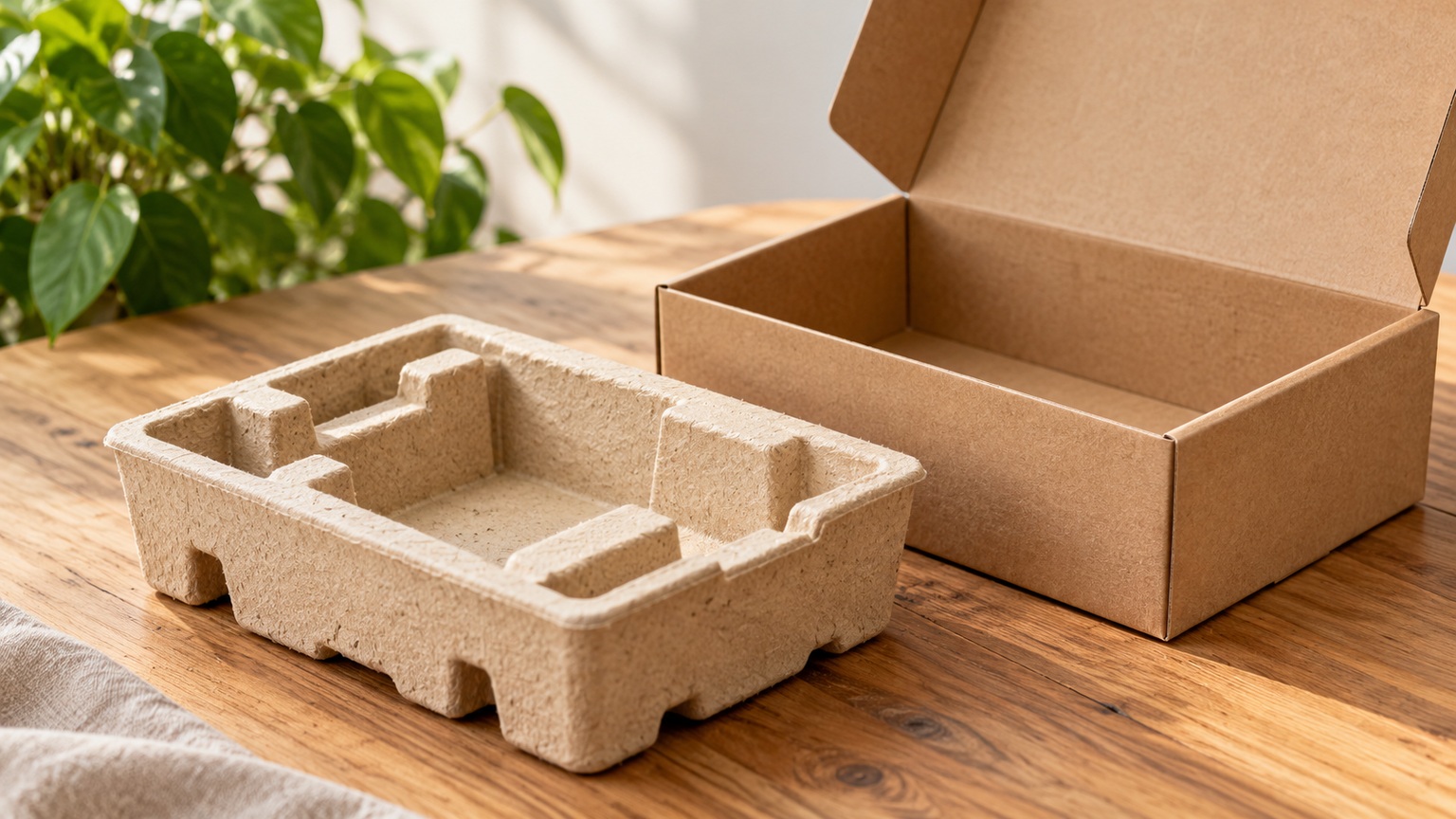
Molded pulp and die-cut cardboard now cover many uses that foam once did, from cosmetics trays to electronics holders. Compare options in our packaging inserts guide, or browse custom packaging inserts.
2. Responsible sourcing and certification
FSC certification shows that paper comes from responsibly managed forests. Our factory holds FSC certification and also operates under ISO 14001 environmental management; see our certifications.

3. Efficient logistics
Transport is a large share of a package's footprint. Flat-pack collapsible rigid boxes reduce the number of shipments for the same quantity. Learn more in how collapsible boxes reduce shipping volume.
4. Minimal and mono-material design
Brands are choosing a few quality finishes over many layers. Avoiding plastic windows, heavy laminates and mixed materials makes recycling easier. Uncoated or soft-touch paper, embossing and foil accents can still look premium.
5. Reusable rigid boxes
A rigid box that customers keep for storage or gifting extends the brand's exposure and reduces waste per use. Magnetic and drawer styles are popular for this; see magnetic vs non-magnetic boxes.
6. Regulation and retailer rules
Rules such as the EU's packaging waste legislation and extended producer responsibility schemes are raising expectations on recyclability and material reduction. Check requirements for each destination market.
At a glance
| Trend | What changes | Benefit |
|---|---|---|
| Paper inserts | Pulp or cardboard replace foam | Recyclable, plastic-free |
| Certified paper | FSC board and wrap | Verified sourcing |
| Flat-pack | Collapsible structures | Lower freight and storage |
| Minimal finishes | Fewer coatings and add-ons | Easier recycling, lower cost |
| Reusable boxes | Keepsake rigid boxes | Longer life, brand exposure |
How to start
- List the plastic parts in your current pack.
- Test paper-based inserts with your product.
- Ask for FSC-certified paper.
- Choose flat-pack where it fits; see collapsible vs traditional.
- Request a sample and compare.
Frequently asked questions
Is paper-based packaging as protective as plastic?
For many products, yes, especially with well-designed pulp or cardboard inserts. Very fragile or heavy items may still need foam; we test with your product.
Can paper packaging still look premium?
Yes. Rigid boxes with textured paper, embossing and foil look premium without plastic.
What does FSC certification mean?
It shows paper comes from forests managed to FSC standards and tracked through the supply chain.
Is paper-based packaging more expensive?
Costs vary. Paper inserts can be cost-competitive, and flat-pack boxes can reduce freight and storage.
How do I know what regulations apply?
It depends on the destination market. Check local packaging and EPR rules, and ask us about material options.
Go paper-based
Tell us your product and sustainability goals and we will suggest materials.
Request a QuoteRequest a Quote
Tell us about your project. Share your box style, size, materials and quantity, and our team will come back with a custom packaging quote.
Leave a Reply